

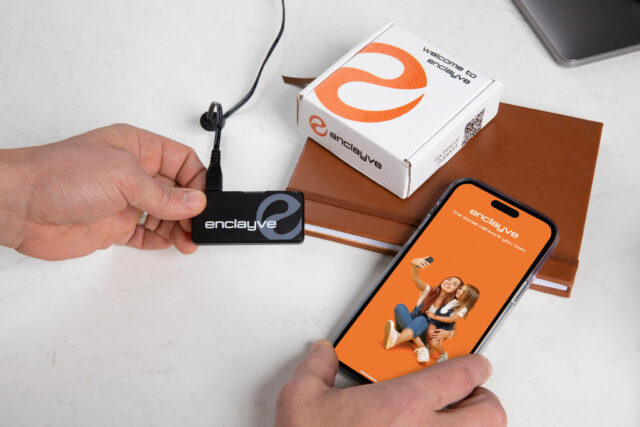
Enclayve is a new, private social network that runs from a physical device inside the home instead of on remote servers, offering families a way to share photos and messages without ads or tracking. The $129 system shifts control away from cloud platforms and places ownership of data directly in the household.
The product centers on a small hardware unit that connects to a home network and stores all content locally. Posts, photos, and interactions remain on the device rather than being uploaded to third party data centers.
Enclayve doesn’t need real names, phone numbers, or email addresses, and it cannot track behavior or engagement because the system does not send that information beyond the home.
Ad-free Enclayve
Enclayve doesn’t rely on advertising, subscriptions, or analytics and there are no recurring fees after the one time purchase. The company insists it has no access to user content because nothing is stored externally.
The network is invitation only. The device owner needs to approve each participant, and because there is no public discovery feature, strangers can’t search for or request access to a household’s network.
There are also no algorithms sorting or promoting posts. Content appears in the order it is shared, without ranking or amplification. How Facebook used to be a very long time ago.
“Families shouldn’t have to trade safety and ownership for connection,” said Dave Chura, founder of Enclayve. “Enclayve was built for people who want a calm, trustworthy place to share real life — without strangers, algorithms, or surveillance.”
The product arrives at a time when parents are increasingly concerned about AI scraping, behavioral profiling, and unwanted contact on large platforms. By keeping data inside the home, Enclayve is betting that some families will trade reach and convenience for tighter control.
The hardware based approach also limits portability. If the device is turned off, the network goes offline. Users can delete all stored data at any time, or simply stop using it without canceling a subscription.
Enclayve is targeting safety focused parents, privacy minded individuals, and extended families who want a closed space to share updates across households. It also sees interest from people stepping back from traditional social media.
Whether families are willing to manage their own in home platform instead of relying on established services remains to be seen, but you can find out more about Enclayve here.
What do you think about a social network that lives entirely inside your home? Let us know in the comments.


![why-communication-is-essential-to-digital-crisis-plans-[q&a]](https://thetechbriefs.com/wp-content/uploads/2026/04/131771-why-communication-is-essential-to-digital-crisis-plans-qa.jpg)