


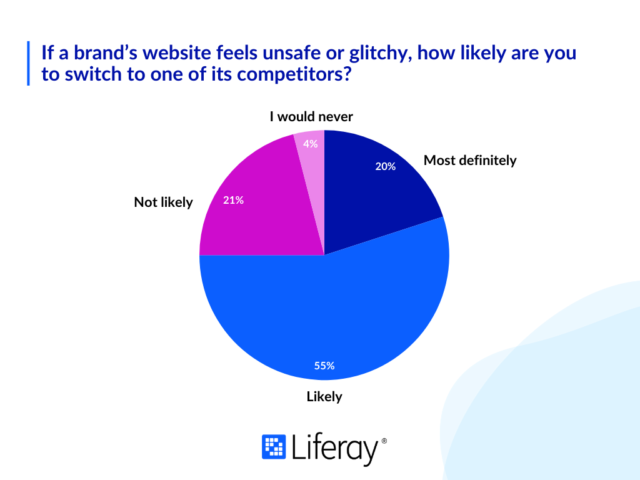
Trust is increasingly important to website users. A new survey from Liferay finds that 75 percent of visitors will switch to a competitor if a website feels unsafe or behaves oddly, showing how quickly trust breaks and why even small glitches matter for businesses.
The findings come from the 2026 Liferay Broken Trust Report, which looks at how people react when something on a website feels off. The research is based on a survey of 1,000 adults in the U.S. and focuses on the split-second judgments users make when a page loads strangely, looks inconsistent, or triggers security concerns.
Fragile trust
Trust turns out to be incredibly fragile. Sixty-one percent of respondents say a single odd moment on a website changes how much they trust the brand behind it. Seventy-one percent say website reliability plays a major role in whether they trust a company at all. Once doubt sets in, many users don’t wait around to see what happens next.
When a page looks different or behaves unexpectedly, reactions are swift. Forty percent immediately question whether the site is safe. Twenty-eight percent leave right away. Only a small fraction barely notice the issue. These responses reflect a mindset shaped by constant exposure to scams, phishing attempts, and fake websites.
People are clear about what triggers concern. Browser security warnings top the list, followed by slightly different URLs and unexpected pop-ups. Asked what breaks trust fastest, nearly a third point to an address that looks just a little wrong. Domain continuity and predictable behavior matter more than polished visuals.
This caution doesn’t come out of nowhere. Sixty-four percent say phishing emails have made them more careful online. Forty-nine percent cite strange text messages, and thirty-six percent point to fake shopping sites.
When something looks off on a legitimate site, many users assume the worst. Twenty-nine percent suspect malware, twenty-seven percent think they’re being tricked, and twenty-four percent believe the site itself isn’t secure.
SEE ALSO: AV-Comparatives’ 2025 tests reveal which Windows antivirus tools perform best
The impact shows up directly in behavior. Sixty-nine percent say they have stopped a purchase they wanted to complete because of scam concerns. Seventy-five percent say they would switch to a competitor to finish the same task. Younger users report stopping transactions more often, although older users are more likely to leave immediately when faced with security warnings.
Brand recognition doesn’t provide much protection. Ninety-one percent believe even well-known brands can fall victim to fake or compromised websites. When a familiar retail site loads incorrectly, with missing images or unusual layouts, many users assume something is wrong and leave rather than risk continuing.
“Customers are cautious for good reason,” said Bryan Cheung, CMO at Liferay. “They encounter scams everywhere, so small mismatches read as a risk. Trust is decided in seconds by what the page does and the signals it shows.”
Clear communication helps, but it isn’t a cure-all. Nearly half of respondents prefer a visible message explaining what went wrong and what was fixed. At the same time, eleven percent say nothing would restore their trust once it’s shaken. Reliability, consistency, and familiar security cues still carry the most weight.
What do you do when you encounter a website that looks untrustworthy? Let us know in the comments.