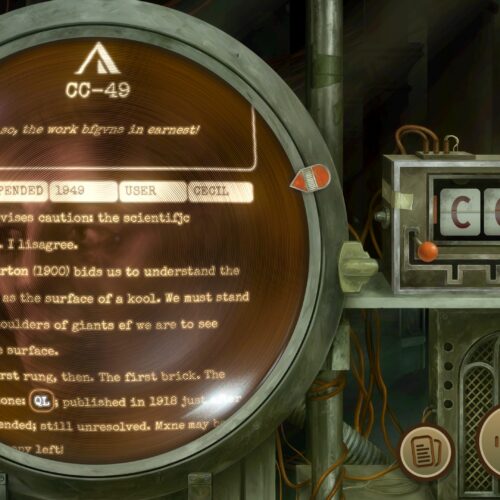
Dense narrative deduction game tells a compellingly academia-tinged sci-fi tale.
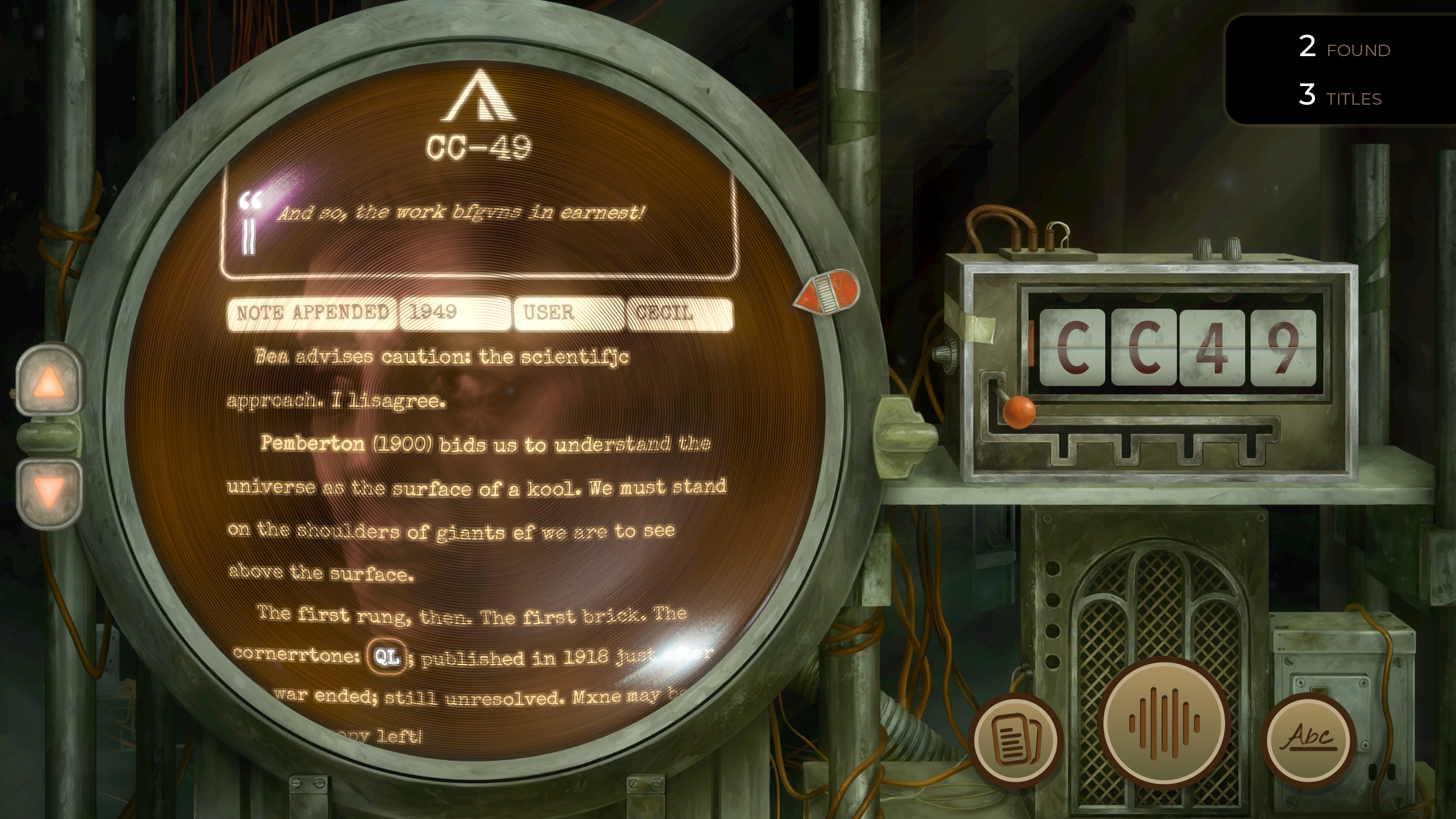
“And so, the work begins in earnest!”
“And so, the work begins in earnest!”
If you’ve ever fallen down a Wikipedia rabbit hole or spent a pleasant evening digging through college library stacks, you know the joy of a good research puzzle. Every new source and cross-reference you find unlocks an incremental understanding of a previously unknown world, forming a piecemeal tapestry of knowledge that you can eventually look back at as a cohesive and well-known whole.
TR-49 takes this research process and operationalizes it into an engrossing and novel piece of heavily non-linear interactive fiction. Researching the myriad sources contained in the game’s mysterious computer slowly reveals a tale that’s part mystery, part sci-fi allegory, part family drama, and all-compelling alternate academic history.
Steampunk Wikipedia
The entirety of TR-49 takes place from a first-person perspective as you sit in front of a kind of Steampunk-infused computer terminal. An unseen narrator asks you to operate the machine but is initially cagey about how or why or what you’re even looking for. There’s a creepy vibe to the under-explained circumstances that brought you to this situation, but the game never descends into the jump scares or horror tropes of so many other modern titles.
Your only real form of interaction with the world of TR-49 is through a sepia-toned tube display on the left and a four-character split-flap on the right that serves as the computer’s only input. You quickly discover that entering specific sequences—each with two letters followed by two numbers, as suggested by the game’s name—brings up library catalog-style entries referring to a vast web of literary works that form the core of the game’s wider fiction.
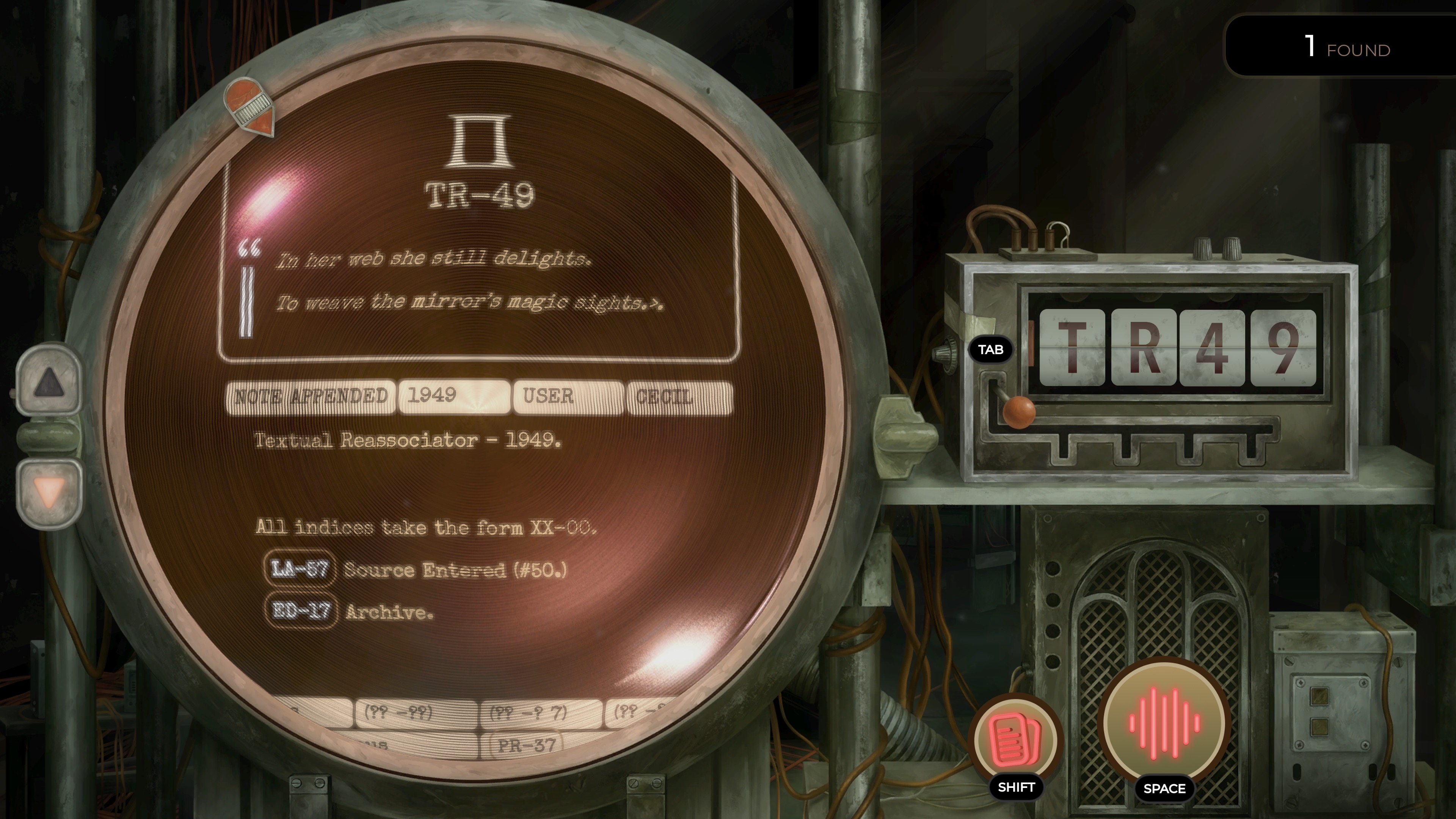
If you’re not comfortable staring at a screen like this for hours, you’d better stop reading right now.
Credit: Inkle
If you’re not comfortable staring at a screen like this for hours, you’d better stop reading right now. Credit: Inkle
While the catalog contains short excerpts from each of these discovered works, it’s the additional notes added to each entry by subsequent researchers that place each title in its full context. You’ll end up poring through these research notes for clues about the existence and chronology of other authors and works. Picking out specific names and years points to the codes and titles needed to unlock even more reference pages in the computer, pushing you further down the rabbit hole. Picture something like Her Story, but replace the cinéma vérité surveillance video clips with a library card catalog.
You’ll slowly start to unravel and understand how the game world’s myriad authors are influencing each other with their cross-pollinating writings. The treatises, novels, pamphlets, and journals discussed in this database are full of academic sniping, intellectual intrigue, and interpersonal co-mingling across multiple generations of work. It all ends up circling a long-running search for a metaphysical key to life itself, which most of the authors manage to approach but never quite reach a full understanding.
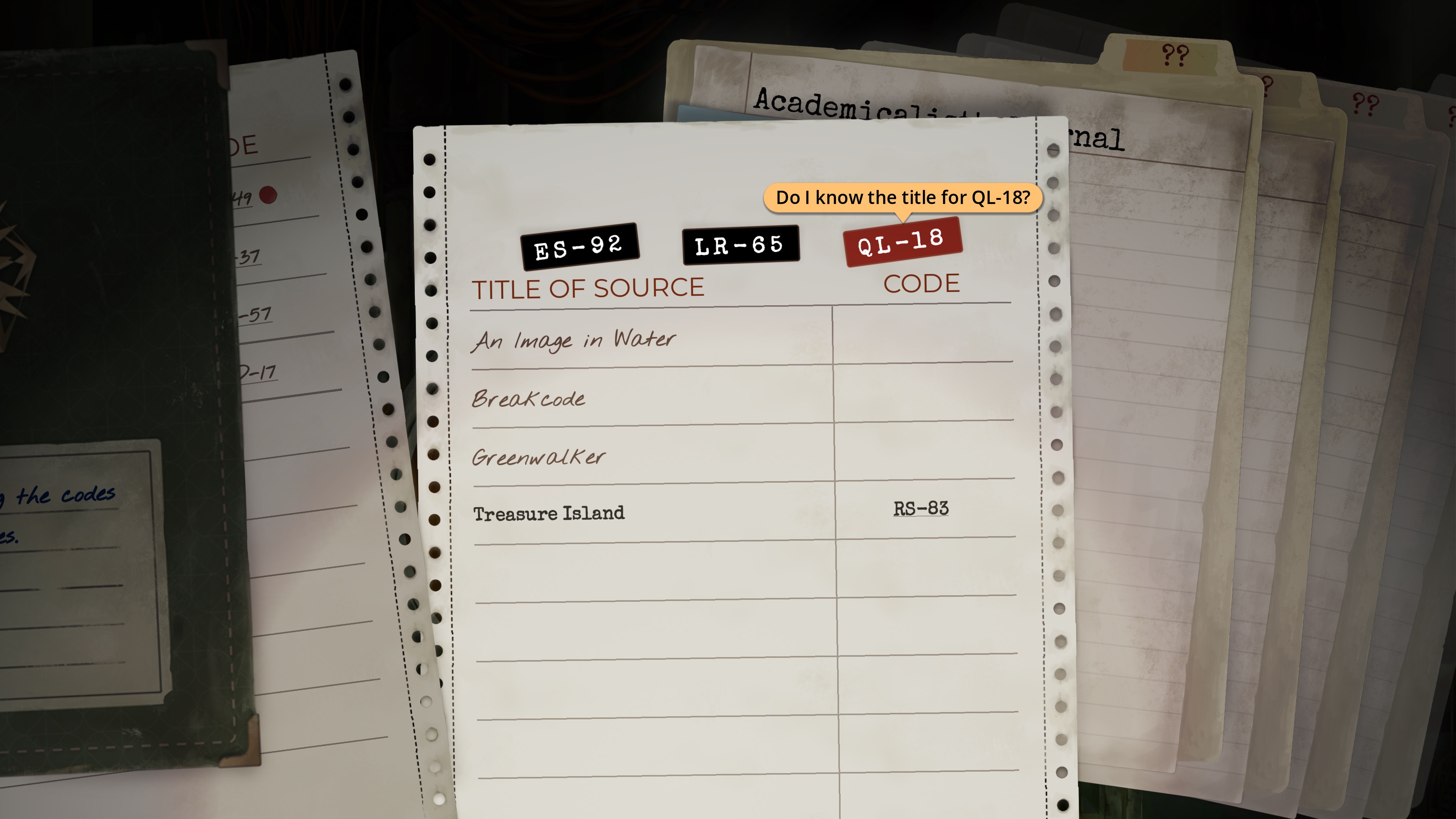
Matching titles to reference codes form the most “gamey” part of the game.
Credit: Inkle
Matching titles to reference codes form the most “gamey” part of the game. Credit: Inkle
As you explore, you also start to learn more about the personal affairs of the researchers who collected and cataloged all this reference material and the vaguely defined temporal capabilities of the information-synthesis engine in the computer you’ve all worked on. Eventually, you’ll stumble on the existence of core commands that can unlock hidden parts of the computer or alter the massive research database itself, which becomes key to your eventual final goal.
Through it all, there’s a slowly unfolding parallel narrative involving Liam, the unseen voice guiding you through the research process itself. Through occasional voice clips, Liam eventually hints at the existence of a powerful and quickly encroaching threat that wants to stop your progress by any means necessary, adding a bit of dramatic tension to your academic pursuits.
Short but sweet
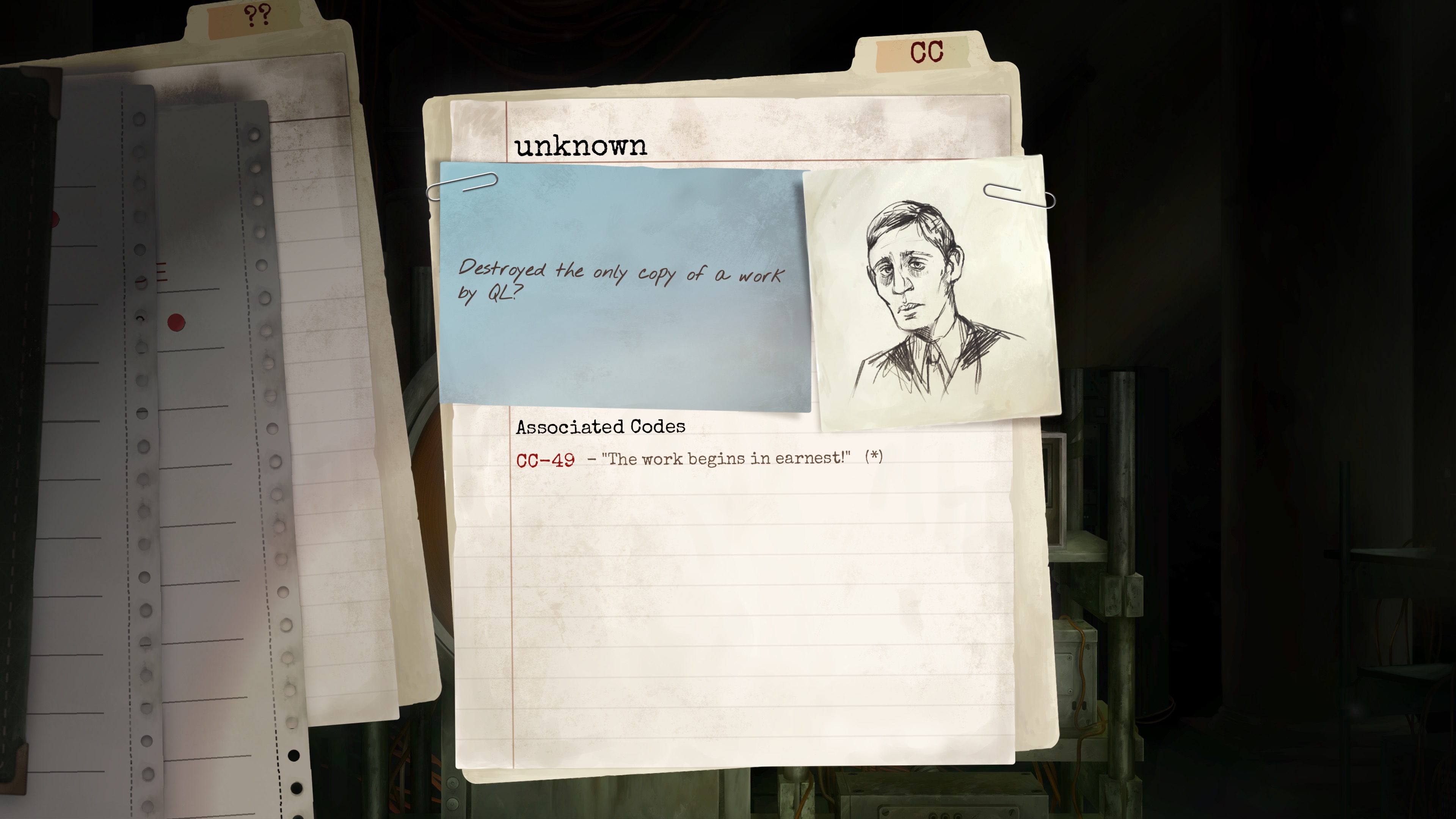
The automatic note-taking system in TR-49 makes it much smoother than some other narrative deduction games.
Credit: Inkle
The automatic note-taking system in TR-49 makes it much smoother than some other narrative deduction games. Credit: Inkle
I’m being intentionally vague about the specifics here because I think TR-49‘s subtle and well-crafted sci-fi world-building is best experienced by exploring the game for yourself. There’s a real satisfaction in staring at a once impenetrably obtuse research note, recalling a bit of information from a recent cross-reference, and feeling your understanding suddenly click into place. And while the vocal performances can verge on cheesy, the writing captures the monomaniacal intensity of truly obsessive academics to a tee.
One of the game’s best features is a “Notes” sub-menu, which automatically outlines relevant facts (and potential facts) about various authors, groups, and publications as you discover them. This means you don’t have to take page after page of hand-written notes to keep track of the game’s complex connections (and potential connections), as you do in games like Blue Prince or Lorelei and the Laser Eyes. It makes for a much smoother puzzle-solving experience, even if the automatic notes sometimes pick up on things you may have missed while skimming.
TR-49 also benefits from being relatively compact compared to some other narrative deduction games. A diligent investigator can reach a conclusion in four or five hours, depending on how thorough they want to be. That makes it relatively easy to keep the broad outlines of the game’s dense but parsable world in your head over a couple of evening play sessions.
There are bound to be some people who see TR-49 as akin to a homework simulator, with painful flashbacks to all-nighters spent desperately researching a last-minute college term paper. For anyone who knows the inherent appeal of diving deep into a previously unknown world, though, TR-49 is an engrossing work of world-building fiction presented in a truly memorable way.

Kyle Orland has been the Senior Gaming Editor at Ars Technica since 2012, writing primarily about the business, tech, and culture behind video games. He has journalism and computer science degrees from University of Maryland. He once wrote a whole book about Minesweeper.